Anti-Inflammatory Eating for Peri-Menopause Support
If you’re in your 40s (or early 50s) and thinking “Why does my body feel different all of a sudden?” you’re not imagining it.
Welcome to peri-menopause.
Hormones fluctuate, inflammation rises, recovery slows, sleep gets patchy, joints feel creakier, and energy can dip for no obvious reason. The good news? How you eat can make a huge difference.
Why inflammation matters in peri-menopause
As oestrogen levels change, the body becomes more prone to chronic low-grade inflammation. This can show up as:
- Joint aches or stiffness
- Bloating and digestive issues
- Brain fog and fatigue
- Poor sleep
- Hot flushes or night sweats
- Feeling slower to recover from exercise
Food can either add fuel to the fire or help calm things down.
What an anti-inflammatory diet really means
This is not a detox.
It’s not cutting everything you enjoy.
And it’s definitely not about being perfect.
Anti-inflammatory eating is about:
- Supporting hormone balance
- Stabilising blood sugar
- Reducing stress on the gut
- Giving your body the nutrients it needs to adapt
Think supportive, not restrictive.
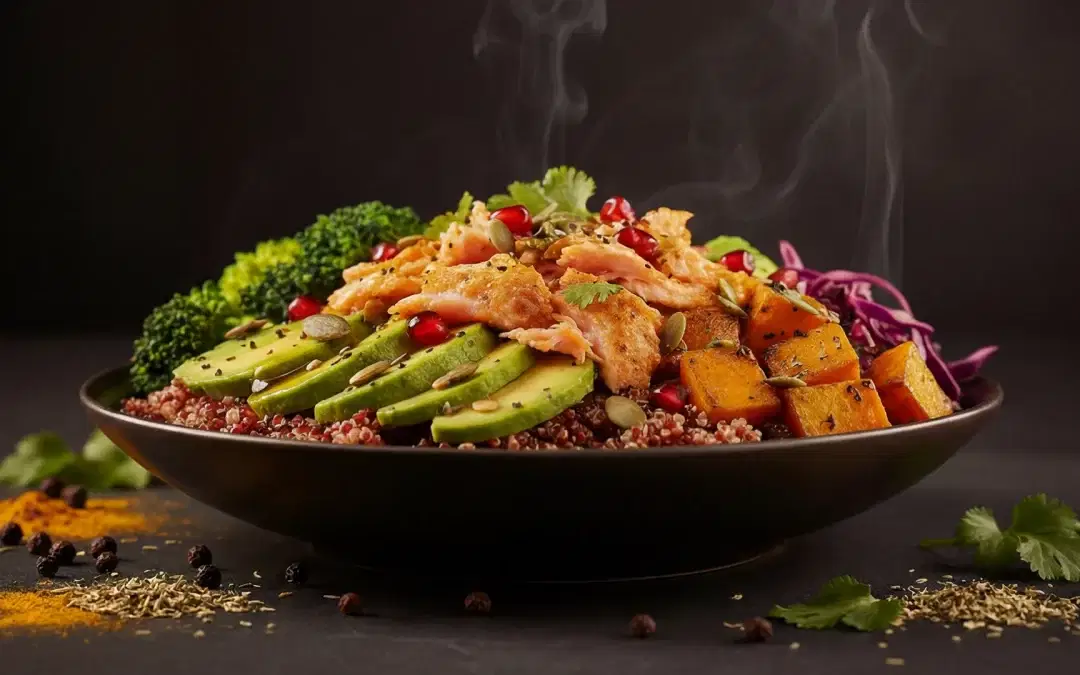
Foods to prioritise
Start by adding more of these no overhaul required.
Healthy fats
- Extra virgin olive oil
- Avocados
- Nuts & seeds
- Oily fish (salmon, sardines, mackerel)
Colourful plants
- Leafy greens
- Berries
- Broccoli, cauliflower, cabbage
- Courgettes, peppers, aubergine
Quality protein
- Eggs
- Fish
- Chicken or turkey
- Lentils, tofu, tempeh
Anti-inflammatory extras
- Turmeric
- Ginger
- Cinnamon
- Garlic
Small additions = big impact.
Foods to be mindful of (not banned)
Regularly overdoing these can increase inflammation:
- Ultra-processed foods
- Excess sugar
- Alcohol (especially affecting sleep)
- Refined carbs eaten on their own
Balance beats restriction every time.
Easy swaps that actually work
- White toast → sourdough with eggs or nut butter
- Afternoon biscuit → Greek yoghurt + berries
- Sugary cereal → oats with seeds & cinnamon
- Coffee on empty → coffee after breakfast
These small shifts often lead to better energy, fewer cravings, and improved sleep.
What clients often notice
When inflammation drops, this is what I hear most:
- “My joints feel better.”
- “I don’t crash mid-afternoon anymore.”
- “My sleep is deeper.”
- “Training feels good again.”
And the big one:
“I feel more like myself.”
The takeaway
Peri-menopause isn’t something to fight it’s something to support intelligently.
Anti-inflammatory eating isn’t a diet.
It’s a way of fuelling your body so it can cope, recover, and stay strong.
And remember: food works best alongside strength training, good sleep, and stress management none of which need to be extreme.
Next month’s Top Tips: Midlife:
Why strength training is non-negotiable in peri-menopause (and why more cardio isn’t the answer).